


From Magic to Measurable Data: The Future of Cathodic Protection
It is time to start pairing decades of hands-on field experience with the data and monitoring tools that make performance provable.
For most of its history, cathodic protection has run on instinct. Experienced technicians could read a system by feel — a hunch here, a gut check there, decades of field judgment nobody wrote down. It worked. But it’s not built to last forever, and Cathtect USA President & CEO Aaron Raath thinks the industry is standing at the edge of a real handoff moment.
Aaron laid out his thinking on a recent appearance on the Coatings Talk Livestream with host Jim Kunkle — and one line from that conversation sums up where he sees things headed: cathodic protection has long been treated like “black magic,” and the industry’s job now is to turn it into something backed by visible, measurable data instead.

A Workforce in Transition
The technicians who built the CP industry are retiring. The people replacing them grew up fluent in digital tools but are still building the field instincts that only come from years on-site. That’s not a crisis, in Aaron’s view — it’s a design problem. The industry needs systems that capture what experienced technicians know and make it visible to the people coming up behind them, rather than letting that knowledge walk out the door.
The next wave of CP technology:
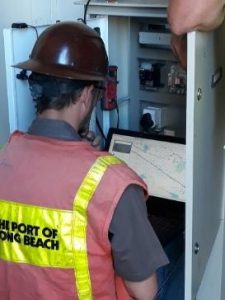
- Smart, digital rectifiers that adjust output automatically based on real-time sensor data, instead of relying on someone remembering to make a manual tap change
- Remote monitoring moving from a premium add-on to the baseline expectation
- AI-driven predictive analytics that catch a developing issue before it requires a truck roll — and before it requires 20 years of gut instinct to notice
- GIS and asset management integration, giving newer team members a single, visual picture of infrastructure health instead of a mental map only the veterans carry
Why AI Isn’t the Threat People Assume
Aaron’s take on AI is direct: it’s not coming for anyone’s job. It’s the tool that finally makes cathodic protection provable — turning a discipline that used to rely on tribal knowledge into one with a visible, defensible data trail. For an industry facing a real experience gap, that’s less about replacing people and more about giving the next generation a running start.
Aaron had spent years working in the cathodic protection industry, attending U.S. industry conferences, and seeing firsthand the gap between what the market offered and what clients actually needed. He saw an opportunity to bring Cathtect’s full-service model — and its decades of global experience — to U.S. infrastructure.
The Risks Don’t Wait for the Handoff
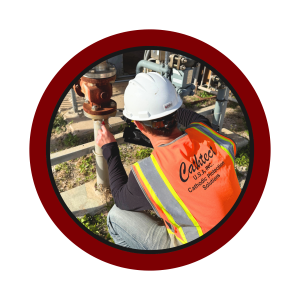
Even as the tools improve, the fundamentals still bite. Aaron pointed to three risks that come up again and again in the field: AC interference from reconductoring and increasingly congested utility corridors, stray current made worse — ironically — by better coatings that turn pipe into a more efficient conductor, and shielding or hidden corrosion on pipelines with a patchwork of old and new coatings, where a one-size-fits-all CP approach can backfire. No amount of smart monitoring replaces knowing what to look for. The goal is giving the next generation of technicians the data to look in the right place, faster.
Built for the Long Haul
Aaron and Jim also pointed to the Corrosion Technicians Association (CTA) — Cathtect is a founding member and sponsor — as part of the answer. Coatings and cathodic protection are, as Aaron put it, “two sides of the same coin,” and closing the generational gap means bringing those two communities together around shared training and standards, not just better software.
That’s the same principle behind how Cathtect approaches every project: pairing decades of hands-on field experience with the data and monitoring tools that make performance provable, not assumed — so the next generation isn’t starting from zero.

At Cathtect USA, we specialize in helping you choose the right device, with the right specifications, for the right application.
📞 Contact us at (772) 646-2873 or visit www.cathtectusa.com to learn more today.