


Project Spotlight · Commissioning
Commissioning Day: How We Brought a Pipeline CP System Online
Getting the anodes in the ground was only half the job. The other half was proving the system worked, and fixing anything that didn’t, before the road went back over it.
Earlier this year, we took on a job that a lot of pipeline owners will recognize. A regional water utility had dealt with repeated failures on an aging concrete transmission main, and it was replacing about a mile of it with new welded steel pipe. Corrosion studies had already shown that the soil along the route was aggressive. The new line had a bonded coating, but it also needed cathodic protection to make it last, and thorough cathodic protection commissioning to prove it.
We supplied the full sacrificial anode CP package for the job. Getting the materials in the ground was only half the job, though. The other half was proving the system worked, and fixing anything that didn’t, before the road went back over it. That’s cathodic protection commissioning, and this one gave us plenty to work through.
What We Supplied
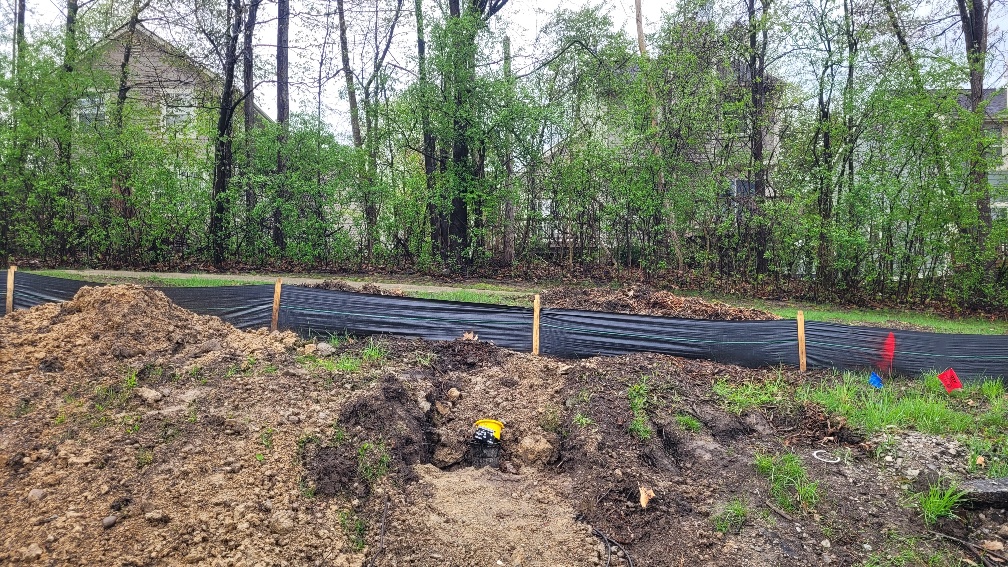
- High-potential magnesium anodes (48 lb, prepackaged)
- Flush-to-grade locking test stations
- Permanent reference electrodes with integrated steel coupons
- Exothermic welding materials and coating repair caps
- Everything else needed to terminate, test, and commission the system
The Challenge
Three sections. Fifteen test stations. Three days.
The new pipe tied into old infrastructure at both ends and at several customer connections. To keep the protection where it belonged, the line was split into three sections that were electrically isolated from each other. We had fifteen test stations spread along the route: anode, isolation, and foreign crossing stations. Every one of them had to tell us the same thing. Each section was protected, each section was isolated, and nothing was hiding a problem.
How We Approached It
Our cathodic protection commissioning process, station by station
1
Native potentials
We recorded baseline pipe-to-soil readings before the anodes were connected.
2
Continuity & isolation
Each section had to be electrically continuous inside itself and isolated from the sections next to it and from other utilities’ pipes.
3
Energize
We connected the anodes and measured how the pipeline responded.
4
Measure performance
Against AMPP SP21424: a pipe-to-soil potential of −850 mV or more negative against a copper/copper sulfate reference electrode.
Most stations responded right away. Readings moved from native levels to protected levels:
But it wasn’t all straightforward, and that’s where commissioning earned its keep.
What We Ran Into
Four things the meters told us
Fixed on site
A test station with no pipe connection
At one anode station, the pipe leads read 0.000 V. In practice, nothing was connected. An isolation station at the same spot had good pipe connections, so our crew installed jumpers between the two. That restored continuity and let the anodes do their job.
After commissioning: about −1.4 V
Flagged for follow-up
A lead that didn’t respond
At one foreign crossing station, one of two pipe leads barely changed after we energized the system, while the other lead responded normally. Most likely, that lead wasn’t actually connected to the pipe it was supposed to monitor. We documented it and flagged it for follow-up rather than burying it in the data.
Improved
A low spot in the protection profile
One anode station passed, but its readings were noticeably lower than its neighbors’. The nearby foreign crossings showed the same trend. Passing on paper wasn’t good enough for us. We came back and added four more anodes at that location to improve current distribution over the long term.
−0.946 V → −1.141 V
All clear
Checking for AC interference
Pipelines that run along roads and utility corridors can pick up induced AC voltage, which drives its own kind of corrosion. We checked for it along the line, and every reading came in well below the 15 VAC threshold. AC corrosion wasn’t a concern.
“
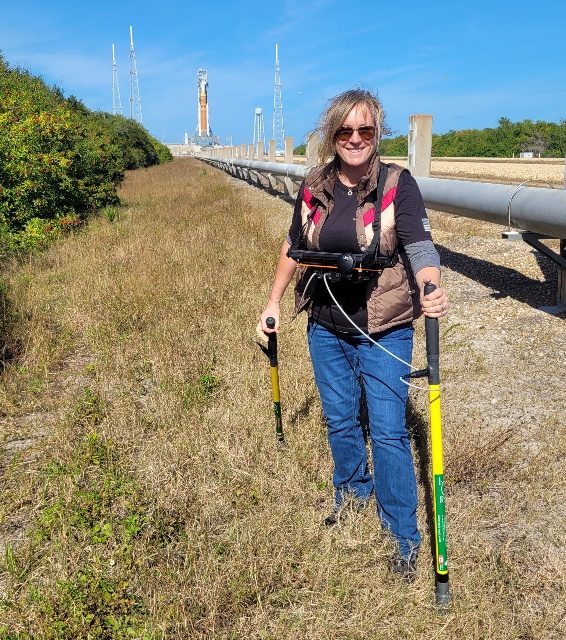
Every job site has surprises: a lead that never got connected, a stretch of pipe that isn’t getting quite enough current. Commissioning is our chance to find those things while the fix is still simple. Meeting the criteria is the minimum. What we want to hand the owner is a system we know will hold up, and the data to prove it.
— Gwynedd HilbertsOperations Manager/Engineer, Cathtect USA
How It Turned Out
With those fixes in place, cathodic protection commissioning wrapped up with the system meeting protection criteria along the full length of the pipeline, and isolation between all three sections confirmed. The owner walked away with a documented baseline for future monitoring, plus a clear record of every field adjustment we made and why we made it.
Why It Mattered
None of the problems we hit were unusual. Missing connections, weak spots in current distribution, and unresponsive leads show up on real job sites all the time. What made the difference was catching them while they were still easy to fix, and having people on site who could diagnose the cause instead of just writing down a number.
That’s why we stayed with this project from supply through cathodic protection commissioning. The team that specified the anodes and test stations was the same team reading the meters, so when something didn’t add up, we knew exactly where to look.