



Aaron Raath Joins Coatings Talk Livestream:
How Pipeline Coatings and Cathodic Protection Work Together: The Role of Coatings vs. CP
Part 1 of 2
The short answer: On a buried or submerged pipeline, the coating is the primary barrier against corrosion, and cathodic protection (CP) is the backup that protects the steel wherever the coating has a defect. The two systems are directly linked. The condition of the coating determines how hard the CP system has to work, and the way the CP system is run can help or damage the coating. Treating them as one corrosion control system, not two separate programs, is what keeps a pipeline protected for its full design life.
Coatings and CP are often handled by different specialists, different teams and even different budgets. But the steel doesn’t know which department is responsible for it. Here’s how the two systems actually interact.
This post draws on a recent Coatings Talk live stream, “Protective Coatings and Cathodic Protection: A Critical Partnership”, where host Jim Kunkle and Cathtect CEO Aaron Raath discussed how the two disciplines depend on each other.
Watch the full conversation: youtube.com/live/w1mrr7daPaw

Aaron Raath
CEO of Cathtect USA
What the Coating Does
A pipeline coating physically separates the steel from the soil or water around it. Without contact between the steel and its environment (the electrolyte), the electrochemical reaction that causes corrosion can’t happen.
A well-applied, high-performance coating covers almost all of the pipe surface. But no coating is perfect. Holidays from application, damage during handling and backfill, field joints, fittings, and decades of soil stress all leave small areas of bare steel. On a large project, a holiday-free coating job is very rare.
What Cathodic Protection Does
Cathodic protection protects that exposed steel. It works by supplying a small direct current through the soil or water to the pipeline, so the steel becomes the cathode of the electrochemical cell and stops corroding.
There are two main types:
- Sacrificial (galvanic) anode systems use anodes made of a more active metal, such as magnesium or zinc, which corrode in place of the pipe.
- Impressed current systems use a rectifier to convert AC power to DC and drive current through anodes into the ground and onto the structure.
CP was never designed to protect an entire bare pipeline. It’s designed to protect the defects. Think of it as an insurance policy: the coating does the work every day, and CP covers the gaps the coating will eventually develop, whether that’s on day one or 30 years later.
How the Coating Affects the CP System
The amount of current a CP system needs depends largely on how much bare steel it has to protect. That makes coating condition the single biggest factor in CP performance.
- Good coating: low current demand, low power use, longer anode life, and manageable maintenance.
- Deteriorating coating: current demand rises, rectifiers run harder, anodes are consumed faster, and the CP system’s design life gets shorter.
Coating breakdown also tends to speed up once it starts. We recently serviced a rectifier that hadn’t been checked in about six years. Bringing that structure back to protection took several steps of adjustment, far more than normal for that time frame. Once a pipeline becomes underprotected, the gap keeps growing until someone corrects it.
Modern coatings add one more twist. Older pipelines often had porous coatings with large areas of exposed steel. Today’s coatings leave much smaller defects, which means the corrosion at each defect is more concentrated. That makes properly designed and maintained CP more important on a well-coated line, not less.
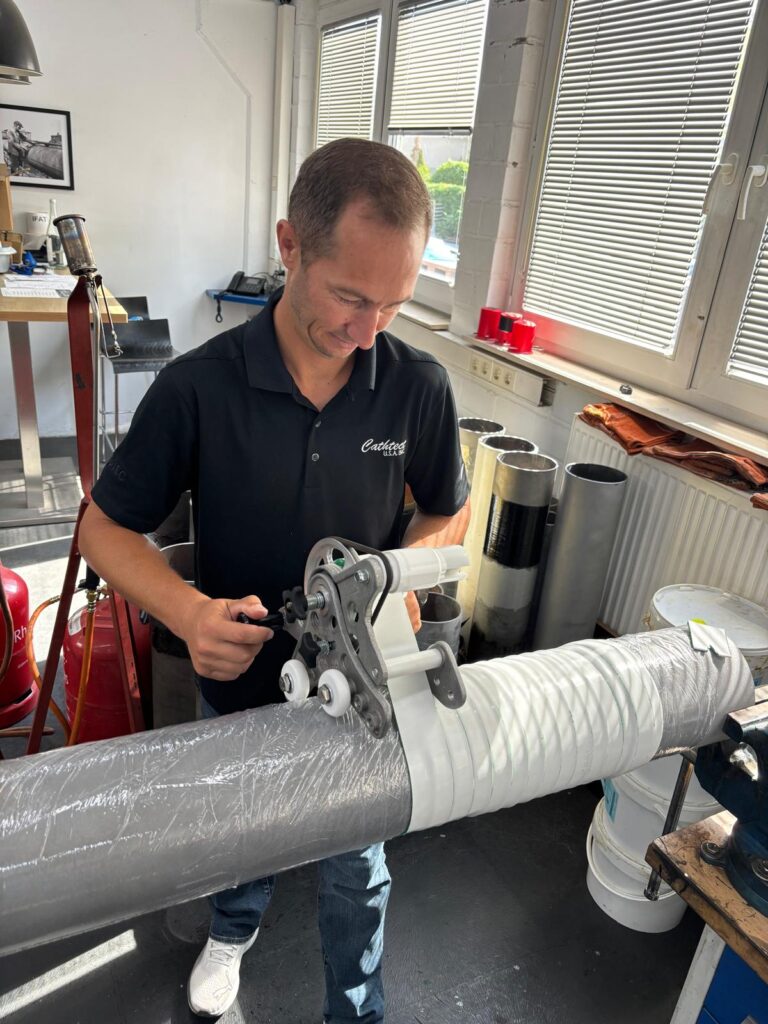
How the CP System Affects the Coating
The relationship works in both directions. CP has a target range, often called the “sweet spot.” Industry criteria, such as those in AMPP standards, typically call for a pipe-to-soil potential of −850 mV or more negative, or a 100 mV polarization shift.
- Too little protection leaves the exposed steel corroding.
- Too much protection can damage the coating. Excess current can cause cathodic disbondment, a buildup of high pH at the steel surface, and hydrogen embrittlement in some steels. This is most likely when a rectifier is set too high or stray currents push potentials past the target range.
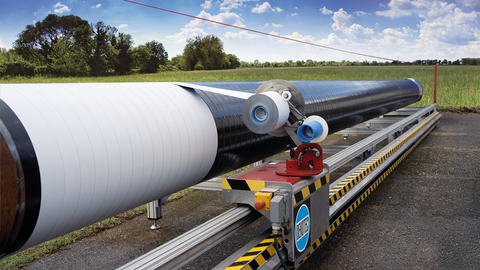
When the Coating Blocks the CP: Shielding
Coatings can also stop CP from working at all. Shielding happens when a coating, liner or other material blocks the current from reaching the steel. Tank liners are a common example. So are materials left on the pipe during construction. On one project we’re working on now, plastic packaging left on a new pipeline is preventing the anode current from reaching the steel, even though the anodes are installed correctly.
When choosing a coating for a cathodically protected structure, its compatibility with CP is just as important as its barrier performance.
AC Interference Raises the Stakes
More pipelines now share corridors with high-voltage power lines, and power demand from data centers and new development keeps growing. High-quality insulating coatings help protect a pipeline from interference, but they create a tradeoff. When induced AC current does find a defect, it all discharges at that one small spot. On these lines, the coating, the CP system and AC mitigation have to be designed together.
Reading the Relationship in the Data
Because the two systems are so closely linked, CP data is one of the best ways to see how a buried coating is performing without digging. Warning signs include:
- Rectifier output that keeps rising over time
- Pipe-to-soil potentials that trend lower from one survey to the next
- Coupon current density readings that point to more exposed steel
- Unusually high resistance or poor CP response, which can point to shielding
Key Takeaways
- The coating is the primary barrier, and CP protects the defects the coating will inevitably have.
- Coating quality controls CP current demand, anode life and system cost.
- Too much CP can damage a coating, and some coatings can block CP entirely.
- CP monitoring data is an early warning system for coating condition.
Frequently Asked Questions
Does a pipeline need cathodic protection if it’s coated? In most buried and submerged applications, yes. Every coating develops defects over time, and those defects are where corrosion concentrates. CP is usually required by regulation for buried steel pipelines carrying gas or hazardous liquids.
Can cathodic protection make up for a bad coating? Not efficiently. A CP system can be designed for a poorly coated pipe, but it will need far more current, more anodes and more maintenance. CP is meant to protect defects, not replace the coating.
Can cathodic protection damage a coating? Yes, if potentials are too negative. Overprotection can cause cathodic disbondment and other damage, which is why CP systems need to be adjusted and monitored.
How do you know if a pipeline coating is failing? Rising CP current demand and declining pipe-to-soil potentials are two of the most common indicators, along with coupon data and above-ground coating surveys.
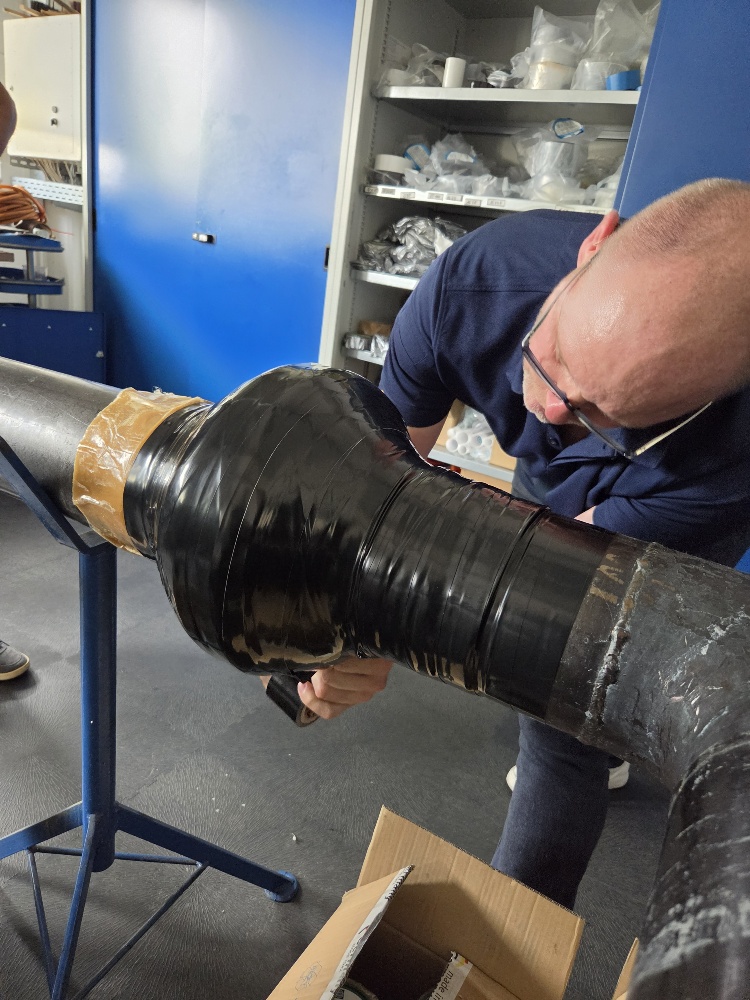

Coatings and CP, From One Team
Cathtect has spent decades designing, installing and maintaining cathodic protection systems. We’re now also supplying tape wrap and field coating repair products, including DEKOTEC’s PLASTELEN® petrolatum tapes, BUTYLEN® tape systems and heat-shrink sleeves. That means one team can look at both sides of your corrosion protection system and make sure they work together.
In Part 2, we look at where coatings and CP most often break down on a project: the handoff between the coating crew and the CP crew. [Link: Part 2]
This post is based on the Coatings Talk live stream “Protective Coatings and Cathodic Protection: A Critical Partnership” with host Jim Kunkle and Cathtect CEO Aaron Raath. Watch the full live stream →
At Cathtect USA, we specialize in helping you choose the right device, with the right specifications, for the right application.
📞 Contact us at (772) 646-2873 or visit cathtectusa.com/contact-us to learn more today.